| Home | Ugovor s Hrvatskom | Kontakt |
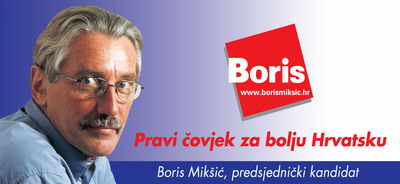
| Boris Mikšić - kandidat za hrvatskog predsjednika na izborima 2009 | |
 |
English |
|
Boris |
|
Boris zastupnik |
|
Program |
|
Arhiva |
|
Podrška |
|
Boris sportaš |
|
Dome, slatki dome |
| Press | |
|
Boris u medijima |
|
Video & audio |
|
Galerija slika |
|
Biografija |
|
Konzularne vijesti |
|
Poslovne vijesti |
|
Nagrade i priznanja |
| Kontakt i linkovi | |
|
E-glasanje 2003 |
|
Vaši komentari i knjiga gostiju |
|
Vaša pisma Borisu |
|
Boris za druge |
|
Staza života Borisa Mikšića |
|
Kontakt |
|
Linkovi |
 |
 |
 |
 |
APPEAL TO THE REGIONAL COURT IN ZAGREB
BORIS MIKŠIĆ
To the Municipal Court in Zagreb
Z a g r e b Reference: XIII-Pn-923/05-18
The defendant Boris Mikšić does hereby, against
The Verdict of the Municipal Court in Zagreb number III K-272/05-4,
dated 9 February 2006
Whereby the Municipal Court in Zagreb , as the first-instance court, through the judge Andrea Grahovac, ruled in favour of the plaintiff Stjepan Mesić , and against the defendant Boris Mikšić in its ruling from 3 January 2007
Declare an
A P P E A L
TO THE REGIONAL COURT
IN ZAGREB
As the court of second-instance
(1) On account of violating the rights as guaranteed by Article 10 of the European Convention on Human Rights;
(2) For applying the law that interprets law and solves disputes among highest state officials in a discriminating manner;
And proposes to the Regional Court in Zagreb , as the second-instance court, that it adopts this appeal and annuls the first-instance verdict and returns the case back to the first-instance court for a new trial.
For this proposal, the defendant is issuing the following
E x p o s i t i o n
- Violating the rights as guaranteed by Article 10 of the European Convention on Human Rights
Article 10 of the Convention says:
“1. Everyone has the right to freedom of expression. This right shall include freedom to hold opinions and to receive and impart information and ideas without interference by public authority and regardless of frontiers. This article shall not prevent States from requiring the licensing of broadcasting, television or cinema enterprises.
2. The exercise of these freedoms, since it carries with it duties and responsibilities, may be subject to such formalities, conditions, restrictions or penalties as are prescribed by law and are necessary in a democratic society, in the interests of national security, territorial integrity or public safety, for the prevention of disorder or crime, for the protection of health or morals, for the protection of the reputation or rights of others, for preventing the disclosure of information received in confidence, or for maintaining the authority and impartiality of the judiciary.”
Article One provides a wide presumptive right to the freedom of expression. It is especially important to emphasize Article 10 (1) does not protect the content of expressed ideas and information only, but also the form of expression, i.e. the linguistic form actually used, i.e. the tone of expression itself. Applying this principle the court in Strasbourg determined that polemical, aggressive, excessive, provocative, and even insulting expression does belong under the protection afforded to its citizens by the member country in Article 10 of the European Convention on Human Rights. Therefore, in the case of Oberschlick against Austria (number 2), it was determined the ruling against the journalist for insult, for calling the politician an ‘idiot,' rather than a ‘nazi,' represents a breach of Article 10. If conditions of voicing this insult are compared with conditions Boris Mikšić jocularly recommended to Stjepan Mesić that, over free golf, he "rests in the villa given as a present by the French Intelligence,” it is clear this punishment of Boris Mikšić is also contrary to mandatory criteria of Article 10 of the European Convention on Human Rights.
Presumptive law according to Article 10 (1) is very wide. It encompasses all types of
expression. The freedom of expression: “forms one of cornerstones of the democratic society, one of basic preconditions for its progress and the development of each individual. In accordance with Article 10 (2), it is applied not only to “information” or “ideas” that are received favourably or considered harmless or indifferently, but also to those that insult, shock or disturb the state or any sector of inhabitants. Such are demands of this pluralism, tolerance and openness, without which there is no “democratic society.”
In the case that Stjepan Mesić launched against Boris Mikšić, accusing for slander in front of the Municipal Court in samobor, and then in front of the Municipal Court in Zagreb, this is exactly such an attempt to intervene from the very top of the state, with the aim of preventing the freedom of expression, as guaranteed by international and domestic law. Boris Mikšić has never factually claimed, neither in the media nor in any other way, that French Intelligence gave Stjepan Mesić a villa in the French Riviera as a present.
Boris Mikšić, before the court and the press, merely expressed his opinion Stjepan Mesić had been tired and that he, on account of that, just proposed he did go for a vacation to a villa granted by the French Intelligence. This statement was nothing but a mere joke that alluded to the story circulating in those days regarding the alleged connection between Stjepan Mesić and the French Intelligence, which Boris Mikšić also confirmed by his statement before the court.
The freedom of “owning” an opinion is interpreted as the freedom of expressing opinion that somebody owns. Article 10 therefore protects the right to criticize, speculate and express value judgements, and is not limited to “true” statements (cf. Lingens vs. Austria, the verdict from 8 July 1986, series A number 103). In this concrete case, no single concrete information on an alleged gift of the French Intelligence was published, so one may justly question why the court could reach the conclusion at all that this concrete statement of Boris Mikšić was factual and not his opinion, joke or – at worst – merely a speculation that is protected by Article 10 of the European Convention on Human Rights.
As it is impossible to objectively prove the truthfulness of the value judgement, the legal request that would require the same, as the contested verdict by the Municipal Court in Zagreb does, would therefore breach Article 10 of the European Convention on Human Rights. On account of this, the Court in Strasbourg strictly applies this principle and carefully examines each statement the truthfulness of which the appellant had to establish before the domestic court, in order to determine whether this was expressing opinion or a factual statement. In case of factual statement, Article 10 presupposes the right to prove its truthfulness. Having this in mind, it is striking the Municipal Court in Zagreb , although they in their ruling with no specific reasons presuppose this was a factual statement by Boris Mikšić, did not consider in any way relevant to investigate or verify the truthfulness of the factual statement seen as such. It is more baffling the law does not proscribe such an investigation.
Limitation of this right by the state is justified only when it can be accorded with Paragraph 2 of Article 10 of the European Convention on Human Rights, i.e. when this is: (a) proscribed by law; (b) when it follows a legitimate goal in accordance with this law; and (c) when such a limitation is necessary for the democratic society to function. (Cf. Lingens, paragraphs 34 through 37.) This latter request was the cause of most discussions in front of the European Court for Human Rights in Strasbourg and it, especially as it pertains to Article 10, resulted in the most number of breaches. In practice this means that intervention by the state in limiting the freedom of expression is not justified if it is merely desirable or even reasonable, but that such an intervention can be justified only if it is required by the protection of certain urgent social needs.
Such an urgent social need did not exist at the moment Boris Mikšić joked on Stjepan Mesić and the stories that circled around Zagreb regarding himself and his connections and French intelligence officers.
The Court in Strasbourg has a wide interpretation of state intervention. This court in general accepts that persecution on account of a criminal offence arising from the act of expression represents a limitation of the right from stated Article 10. Likewise, any verdict against a person and his/her punishment based on criminal offences arising from their acts of expression the same court considers a state limitation of these rights. The court, having determined that the state in this sense limited somebody's rights, transfers the responsibility to a member state that needs to clarify this limitation, by showing each of the above requests for a lawful limitation of the right of the freedom of expression has been fulfilled, taking into account tha facts of the case.
In this context, the relevant question is whether the reasons the state offered in order to explain the limitation to the right of the freedom of expression are relevant and sufficient. The court can be satisfied in doing so only if the state applied those standards as accorded with the principles as contained in Article 10, and only if those reasons are based on an acceptable appraisal of relevant facts. [Cf. Zana vs. Turkey (1999) 27 EHRR 667]. In brief, in order that someone's limitation of the freedom of expression could be allowed, the restrictive measure must be in proportion to the aim of Article 10 (2) and the conclusion on the same must be based on appropriate appraisal of the facts of the case. Although the standard for justified limitations is not always identical in cases in question, regarding the limitation of the freedom of expression, a high standard is required, which says the reasons for the limitation must be convincing.
Thereby, the more stringent the limitation, the reasons have to be more convincing. In
the case of Tolstoy Miloslavsky vs. the United Kingdom (1995) 20 EHRR 442, the European Court acknowledged that high compensations assigned in civil lawsuits initiated on account of slander display the tendency to be in disproportion to the damage caused to reputation the plaintiff suffered. The court emphasized the binding (“depressing”) effect compensations too high have on the freedom of expression generally. This is especially frustrating in the context of political discussions in former communist countries, where this manner can effectively be used to prevent expressing the full truth on individuals' and state institutions' functioning and business which are, as it is still the case in Croatia, under heavy influence of ex communist party members, like the plaintiff Stjepan Mesić and many other state officials, which includes many judges, who thus do not want to open a debate on their (poor) qualifications for responsible positions in the modern Croatian democratic society.
The need for criminal sanctions and its proportion requires a special justification. The court must consider whether the state could have utilized other, less stringent means beside criminal sanction in order to achieve the same goal of Article 10 (2) i.e. the protection of others' reputation or rights.
The Strasbourg court granted the highest level of protection to the expression of political and public interest, and therefore attacks on politicians and other public persons deserve special protection, for: “…[The politician] unavoidably and consciously exposes himself/herself to a careful examination of each of his/her
word and act, be it from the press or the wider public, and in accordance with this he/she must exhibit a higher tolerance level…”
It is by all means important to emphasize that in Croatia during the relevant period, despite significant risk independent press were exposed to, enough information pointing to Stjepan Mesić's being an associate of infamous Yugoslav intelligence agencies had already been released, and that his actions had been concentrated to the area of France where he had ostensibly been in charge of monitoring the political work of Croatian citizens in France. Stjepan Mesić, in this context, not only did not display the required “higher tolerance level,” but – thorough lawsuits that threatened imprisonment – indeed tried to stop any discussion on this important topic, so that his political competition had recourse left only to jokes in this manner, because in the scope of the state system of today it was not possible to initiate any investigation in this direction, not only as to Stjepan Mesić, but for a whole host of state officials and people responsible for the media, not to mention the execution of such an investigation itself.
This modern formulation of European (and Croatian) law also refers to attacks towards the state. On account of this, in the case of Ozturk vs. Turkey , the Court in Strasbourg ruled that: “…because of the dominant position the government holds, it is necessary for it to refrain from recourse to criminal procedures, especially when there are other ways of responding to unjustified attacks and critique by its enemies…” At all times relevant to this litigation Stjepan Mesić was President of the Republic of Croatia so this was but a reason more to have applied this principle to this case also – that he personally launched against Boris Mikšić. The irony of such treatment can not be fully realized without taking into account the fact that, although citizens in Croatia are, from a formal legal viewpoint, equal before the law, none can litigate against Stjepan Mesić on account of his immunity that protects him, while he can simultaneously prosecute Croatian citizen, and – as there is every indication for it – moreover urgently.
- The Application of the Law that Interprets Law and Solves Disputes among High State Officials in a Discriminating Manner
Article 15 of the Criminal Law Act states criminal offences against honour and reputation. Articles 199 through 202 contain an array of criminal offences that can be committed by speech or writing on other individuals. Article 204 enables the plaintiff or his family to privately litigate against these criminal offences. This case shows how unjust is such private prosecution of criminal offences.
Despite valid reasons stated in the appeal Boris Mikšić submitted to the Regional Court in Velika Gorica, none of these arguments was taken into account and the verdict of the Municipal Court in Samobor was confirmed. The Regional Court in Velika Gorica having reached its verdict, the Municipal Court in Zagreb fully adopted the conclusions of these two courts so there is an impression this is about an automatic right to compensation to alleged damage that can under no circumstances be questioned. Although Boris Mikšić stated the elements of relevant encroachment of the provisions of criminal procedure in his appeal, for the verdict was incomprehensible, contrary to the reasons for it, and there is also a contradiction between the findings of the first-instance court and the proofs derived during the procedure, and for individual findings no valid resons were stated or no reason whatsoever was stated, neither of these appeals was not only not adopted, but never seriously considered.
In his appeal, Boris Mikšić stated the very formulation of the verdict was unclear, because it was not at all determined whether the defendant was incriminated in order to call for a press conference with the aim of publicly and morally discrediting the private plaintiff, or the same was called for on account of some other reasons; it is futher unclear what the supposition that the defendant would present the private plaintiff as a corrupt person was based on, a person prone to foreign influence to the detriment of national interests, and as such dishonoured for holding the office of President.
That is, such factual statements are not based on any evidence, and moreover, Boris Mikšić has never given such statements, nor were his intentions such. Also, the private plaintiff did not offer any evidence that would determine Boris Mikšić committed the criminal offence in the incriminating manner, but this accusation is a subjective conclusion of the private plaintiff, not at all based on any real facts.
It is also unclear why the first-instance court “removed” part of the description of the criminal offence from the private suit (the availability of the slander to a larger number of people), for, without this part, this does not qualify as an act from Article 2.
In the exposition of its verdict, the first-instance court states i.e. reproduces only the defendant's defence out of derived evidence, and while it admittedly states the private plaintiff was “questioned” as witness, and that Xeroxed newspaper articles stated in more detail in the contested verdict's exposition were read, and that at the end of hearing evidence an excerpt from the defendant's criminal register was also read, it uses not a single word to state what the private plaintiff stated, nor what the stated newspaper articles say, which is then followed by appraisals of all evidence, both individually and as a whole, and the analysis of defendant's defence, which is compared with other derived evidence (???), and then determines the criminal offence, as charged against the defendant, was fully proven.
Boris Mikšić's lawyer did not at a single moment state the defendant would call for a press conference with the aim of discrediting the private plaintiff (for such a statement would be detrimentall to his defendant), so it is fully unclear what the part of the exposition where the first-instance court mentiones this statement of the defendant's lawyer refers to.
Neither is it clear how the defendant could ask for the correction of the information as published in newspapers, for if this was information mispublished as to the private plaintiff, then the private plaintiff could have asked for a correction of the wrong information.
It is not clear based on what the first-instance court determined “there is no doubt cited defendant's statement is a lie,” calling upon the defendant's defence as “not claiming otherwise,” when the defendant declared he did not even know whether the statement regarding the villa is a lie, this because he cares not, and all this because of a full statement regarding the vacation on the French Riviera where the weather is nice, a golf course the defendant offers the private plaintiff to be organized, out of which statement only the villa part was taken.
It is unclear what connection there is between determining the existence of the incriminated act and the defendant's statement this procedure is nonsensical and why the court of the first-instance would expose upon in the contested verdict regarding this at all.
The first-instance court's standpoint that it is irrelevant for the procedure whether the incriminating statement damaged the private plaintiff or not is especially baffling, for it is always important in a case regarding any criminal offence what damage i.e. which consequences occurred because of it.
Also, the first-instance court insists the part of defendant's defence where he states the disputed statement was given in a wider, “jocular” context is not acceptable, and this because it considers the statement regarding the villa separately, exactly in the manner the private plaintiff does, and despite the defendant's statement some people heartily laughed at this statement (viewing it in a wider, correct, jocular meaning), the standpoint of the first-instance court, based on the "article" in Slobodna Dalmacija, that people were shocked, is based on no solid evidence.
Part of the exposition of the contested verdict, where the first-instance court states "we all remember the footage from the press conference," leads to the conclusion the first-instance court based its verdict on own immediate findings regarding the subject of this procedure, that have no relation to the undertaken evidence hearing, so the defendant holds such evidence can not be thought of as evidence in this procedure, while it also points to an unobjective and biased approach of the first-instance court in this case, in favour of the private plaintiff.
In his appeal, Boris Mikšić stated there is also a breach to the criminal law detrimental to the defendant, for during the procedure, no intention of the defendant for committing the criminal offence in question was proven; on the contrary, from the conduct of the defendant during the procedure, as well as from his defence that was not questioned by any objective evidence, it can be seen the defendant issued the disputed statement in a wider context, and confessed this may have been rash, but with no intention of committing the criminal offence in the manner charged against him, but with the aim of gaining sympathy for himself, and not with the aim of discrediting the private plaintiff, especially not presenting him in the manner as construed by the private suit. As no defendant's intention for committing the incriminated criminal offence described in the private suit was established, his guilt is non-existing, and it follows - so is the criminal offence.
From the above statements, it is clear the facts remained incomplete and wrongly determined, as to all the relevant elements determining the existence of the criminal offence, especially concerning the indetermined consequences of the same, for the private plaintiff neither in his suit nor in his statement explained the slander by the defendant, i.e. what constitutes the defendant presenting him as corrupt, prone to foreign influence and ineligible for executing the office of President, especially having in mind the circumstance that it is precisely the private plaintiff that was elected President as a presidential candidate.
Despite all these problematic elements in the verdict that caused Boris Mikšić, on account of his joke about Stjepan Mesić, the State President, to be conditionally sentenced even to imprisonment, the Municipal Court in Zagreb fully accepts this verdict of the Municipal Court in Samobor. Such uncritical obedience can be justified only by fear of consequences in case of non-reaching or non-confirming the "appropriate" verdict. Exactly this was one of the reasons for the critique of the law that allows imprisonment as sanction for slander in Croatia , even when the slander expressed is based on a true event. Such a law was obviously envisioned as threat to those who dare crticize the ruling regime and its leading men.
Such an approach towards regulating the freedom of expression insufficiently recognizes an important difference between expressing facts and opinions. In the Croatian law, it is assumed that voicing both opinion and facts can create a basis for criminal prosecution. The relevant defence (in Article 200(3)) reaches only as far as proof of truthfulness or "the justifed reason why [the person] believed" in its truthfulness.
As stated above, the truthfulness of opinion can not be established, so accordingly – the request to prove the justified reason why a person believes in the truthfulness of something can not be fulfilled in case of expressing opinions. However, with the assumption that opinions are punishable, a wider defence should be enabled as to the expression of opinion with honourable intentions. The Municipal Court in the contested verdict does not deal with this matter at all.
For the basic criminal offence according to Article 200 (1), the only condition is that the statement "can" be detrimental to the reputation of another. It is indeed hard to justify laws that punish for possible damage, with no conditions existing for the actual damage or determining a statement is slanderous by calling upon the definition of slander which necessarily includes causing damage to reputation. The damage would then have to be measured using some objective standard. In the verdict of the Municipal Court in Zagreb , no single relevant element is based on objective facts but is completely arbitrary in its application of the law for selectively chosen statements, with the aim of currying favour with Stjepan Mesić, as Croatian President. Stjepan Mesić can sue the citizens of the Republic of Croatia but he himself can not be sued, nor placed in a situation in which the truthfulness of statements at least could jeopardize his position. For such an approach to the problem, there can not be nor is there any other reasonable reason.
Having in mind all stated above, the defendant proposes this appeal be added to the file and delivered to the second-instance court for its deliberation, and to this court he proposes the verdict be changed and Boris Mikšić cleared of guilt, and of punsihment, or that the same be annuled and the case returned for a new procedure.
Zagreb, 2 March 2007
_____________________
Boris Mikšić, the defendant
objavljeno: 26/03/2007 15:09:42

| |||||||||||||||||||||||||||||||||||||










| Izborni program |
|---|
Program   |
| Poslušajte novu pjesmu Vladimira Miklera, "Hrvatski san" posvećenu Borisu |
|---|
| "Hrvatski san" |
| Borisova promidžbena poruka: |
|---|
| Windows Media Video (WMV) |
| Spot snimili Splićani u čast Borisu prilikom njegova posjeta Splitu 19. -21. rujna 2004. godine |
|---|
| "Za Borisa!" |